• Skip to primary navigation
  • Skip to main content
  • Skip to primary sidebar
  • Skip to footer
Scotland Lovers Logos RVB_Principal bicolore

Scotland Lovers

Edinburgh

National Museum of Scotland (Edinburgh): visit + photos

By Sèverine, Region Lovers | July 7, 2025 | contains affiliate links - if you use them, we get a small commission (read more)

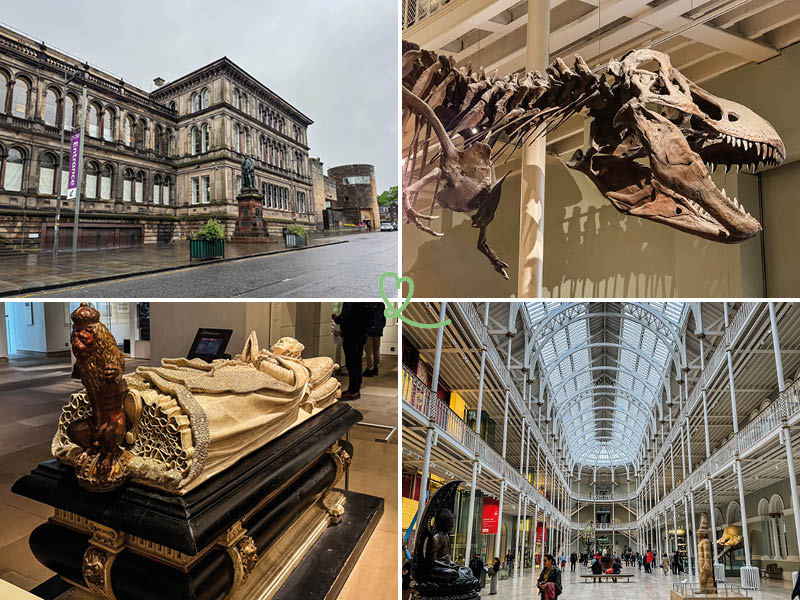
Visiting Edinburgh? Don’t miss the National Museum of Scotland! This emblematic institution of the Scottish capital houses one of the UK’s richest collections. We enjoyed the diversity of its 36 galleries spread over 7 floors. The visit is a captivating journey through science, art and history.

In this article, you’ll find some useful tips to help you prepare for your visit and have a wonderful time!
visit National Museum of Scotland

This opinion is completely independent, based on our experiences. We visited the region anonymously, making our own choices and paying our bills in full.

Why visit the National Museum of Scotland

Is the National Museum of Scotland worth it? Our opinion:

Yes, the National Museum of Scotland is definitely worth a visit. We were impressed by the richness of its collections, which cover everything from natural science and technology to world cultures and Scottish history. The building’s remarkable architecture blends Victorian style with contemporary extensions. The National Museum of Scotland is, in our opinion, one of the best things to do in Edinburgh!

National Museum of Scotland - Outstanding collections

Why is the National Museum of Scotland famous?

The museum is internationally renowned for a number of reasons:

  • Here you’ll find Dolly the sheep, the world’s first cloned mammal and now a global scientific icon.
  • The collections relating toScottish history are among the most comprehensive, with unique artifacts such as the reconstructed tomb of Mary Stuart.
  • The museum is also distinguished by its hybrid architecture. The Victorian building from 1866 and the modern extensions from 1998 create a stunning architectural ensemble on Chambers Street.
National Museum of Scotland - architecture

Our favorite moments

In addition to our keen interest in the collections, which we’ll share with you later in this article, we loved it:

  • The Grande Galerie and its magnificent glass roof, the architectural heart of the museum
  • The Millennium Clock and its regular mechanical animations
  • The panoramic view from the 7th floor terrace, an unforgettable view of Edinburgh and its castle (even in the rain!).
  • The small space on the 3rd floor dedicated to ceramics.
National Museum of Scotland - ceramics
WHERE TO STAY IN Edinburgh

Our favorites: neighborhoods and hotels

Our selection is coming soon Hotel 1 – See prices, photos and availability

Our selection is coming soon Hotel 1 – See prices, photos and availability

Our selection is coming soon Hotel 1 – See prices, photos and availability

See our complete selection of the best hotels in Edinburgh (coming soon)

See all available accommodation >>

History in brief

The history of the National Museum of Scotland is built around several milestones:

  • 1866: Opening of the Victorian building on Chambers Street, designed by David Bryce in the Scottish Renaissance Revival style.
  • 1904: Museum extension to accommodate growing collections
  • 1998: Merger with the Royal Museum to create the National Museum of Scotland
  • 2011: Major £47 million renovation, and creation of 16 new galleries
  • 2016: Opening of new galleries dedicated to science and technology
National Museum of Scotland - History of the building

Access: National Museum of Scotland, Edinburgh

Where is the National Museum of Scotland?

The National Museum of Scotland is located in Chambers Street, Edinburgh (EH1 1JF).

  • In Edinburgh city center, in theOld Town district
  • 5min walk from the Royal Mile and Edinburgh Castle
  • Close to the University of Edinburgh and Grassmarket
National Museum of Scotland - Location
RENT YOUR CAR IN Scotland
  • Compare prices on our preferred platform: DiscoverCars – one of the best rated sites.
  • Choose a car that’s not too wide, as some roads have only one lane.
  • Book early for choice.
Driving in Scotland
View cars >>

See our tips (coming soon)

How to get there?

The museum is within easy reach of central Edinburgh.

  • From Waverley station, it’s a 10-minute walk up to the Royal Mile.
  • Regular bus routes stop nearby.
  • If you’re planning to visit the museum as part of a city tour, you can opt for a multi-stop bus that will leave you in front of the museum. See prices, photos and availability.
National Museum of Scotland - Transport access

Parking

  • Parking in Edinburgh’s historic center is limited, and there are a few on-street pay spaces, but they are rare.
  • The NCP Edinburgh Castle Terrace parking lot is an 8-minute walk away, while the Blackfriars St car park is only 6 minutes away.
  • For a leisurely visit, take public transport or walk from your accommodation if you’re staying in the city center.
National Museum of Scotland - Parking
Blackfriars St Parking
discover edinburgh
  • What to do in Edinburgh (coming soon)
  • Best hotels (coming soon)
  • Best restaurants (coming soon)
Edinburgh at sunset

Useful tips: duration, schedules, eating…

Best time to visit

We found that the National Museum of Scotland is a very busy museum. It’s always a bit crowded, especially on rainy days, which are relatively common in Edinburgh. Sunny weekday afternoons can be quite peaceful.

National Museum of Scotland - Best moment

Length of visit and main difficulties

  • Allow at least 3 hours for a complete visit, 4 hours if you wish to see everything in detail.
  • The museum covers 7 floors with 36 galleries: plan your visit according to your interests.
  • Access is fully adapted for people with reduced mobility thanks to the elevators.
  • Free changing rooms are available at the entrance.
National Museum of Scotland - Visiting time

Advice on how to visit

We began our visit in the main gallery. This allows you to get an immediate feel for the building’s architecture. We then gradually climbed to the upper floors. After a break at the Balcony Café, we returned to the tower to finish the tour on the 7th floor terrace, with its panoramic view of the city.
Pick up a free map at reception to help you find your way around this vast complex.

National Museum of Scotland - Map
PLAN YOUR DREAM TRIP AROUND scotland

All the information you need for your trip:

  • 15 maps for easy planning
  • + 170 pre-selected locations
  • Practical advice
  • + 170 photos to help you choose
Coming soon >>
Cover-eBook-Road-Trip-Scotland

Visiting with children

  • The museum is perfectly suited to families.
  • Children love the animal gallery, with its life-size T-Rex and numerous interactive features, but there are also discovery trails, and we spotted an adventure area entirely dedicated to them on the 5th floor.
  • More info here
National Museum of Scotland - Family visits

Schedules and rates

  • The museum is open daily from 10am to 5pm. Closed on December 25 and January 1 only.
  • Admission to all permanent collections is completely free, making it one of Edinburgh’s most accessible attractions.
  • Only certain temporary exhibitions may be subject to a charge.
  • Visit the official website for more info here.
National Museum of Scotland - Opening hours and prices

Guided tours

  • Free guided tours are offered daily.
  • Audioguides are also available in 5 languages (English, German, Spanish, French and Chinese) via the Smartify app. During our visit, they offered 3 different themes: the must-sees, LGBTQIA+ stories and a mindfulness trail to explore the museum in complete serenity.
National Museum of Scotland - Guided tours

Catering

We spotted 2 restoration points within the museum grounds:

  • The Museum Kitchen on the first floor offers modern Scottish cuisine in elegant surroundings.
  • For a quick break, the Balcony Café on the 3rd floor offers sandwiches, pastries and hot drinks.
National Museum of Scotland - Restoration
Balcony Café

Explore the natural and scientific worlds of the main building

The Grande Galerie and the Millennium Clock, between light and mechanics

As soon as we entered the Grande Galerie, we were captivated by the magnificence of its Victorian glass roof, which bathes the space in exceptional natural light. This architecture of iron and glass, typical of the 19th century, creates a grandiose atmosphere in which visitors move harmoniously between the different galleries.

National Museum of Scotland - The Great Gallery

At the edge of the gallery and at the foot of the escalators, don’t miss the Millennium Clock. We loved its mechanical animations, which are triggered regularly. Take your time to observe the details of this contemporary work of art, a veritable technical feat that blends traditional watchmaking with modern innovation.

National Museum of Scotland - Millennium Clock

Dolly the cloned sheep at the heart of technological innovation

In the section dedicated to cutting-edge technologies, we searched for and found the famous Dolly! This pretty sheep has become a worldwide symbol of the scientific advances of the 20th century. Displayed in a showcase on a specially-designed circular base, she is enthroned at the heart of technological innovation.

National Museum of Scotland - Dolly the cloned sheep at the heart of technological innovation

A life-size T-Rex in the Animal World Gallery

The “Natural World” gallery impressed us with its imposing tyrannosaurus rex skeleton, which majestically dominates the space. The dimensions of this prehistoric predator, perfectly reconstructed using modern paleontological techniques, are spectacular.

National Museum of Scotland - A life-size T-Rex

Around this giant of ancient times, you can admire a remarkable collection of naturalized specimens that trace the evolution of life on Earth. Well-designed interactive displays allow you to explore past and present biodiversity in detail, from the tiniest insects to the largest mammals.

National Museum of Scotland - The Animal World Gallery

Explore cultures, arts and everyday objects

Suspended pirogues in the maritime routes gallery

In the “Facing the Sea” room, we loved the traditional boats from Oceania that floated above the void. They bear witness to the extraordinary nautical skills of the Pacific peoples. Note the finesse of their construction, based on ancestral techniques handed down from generation to generation.

National Museum of Scotland - Hanging pirogues

Around these masterpieces, you’ll discover a fascinating array of objects linked to global navigation. The exhibition reveals how the oceans have always been routes of cultural exchange rather than barriers, linking civilizations through millennia of maritime routes that you can retrace thanks to the interactive features on display.

National Museum of Scotland - The Maritime Routes Gallery

Egyptian mummies and Buddhist statues in sacred collections

Galleries devoted to ancient Egypt and Asia transported us into the mysterious world of millennia-old spiritual beliefs. We were particularly struck by the presence of authentic mummies, preserved with consummate skill by ancient embalmers. The funerary objects that accompany them tell a vivid story of Egyptian beliefs about the afterlife.

National Museum of Scotland - Egyptian mummies in the sacred collections

In the Asian section, you’ll be struck by the serenity emanating from the Buddhist sculptures, from Burmese Buddhas to Chinese bodhisattvas. Each expresses a particular philosophy of spiritual awakening. We found it fascinating to compare these different approaches to the sacred, from the elaborate rituals of Pharaonic Egypt to the contemplative meditation of Buddhism. They are universal testimonies to the human quest for transcendence.

National Museum of Scotland - Buddhist statues

An 18th-century Mantua dress in the fashion gallery

In the “Fashion and Style” exhibition, we loved this 18th-century Mantua court dress. It epitomizes the splendor and constraints of the European aristocracy of the Ancien Régime. This spectacular piece, with its precious fabrics and extraordinarily fine embroidery, revealed the complex dress codes that governed society at the time.

National Museum of Scotland - An 18th-century Mantua dress in the fashion gallery

This gallery brilliantly traces the evolution of fashion as a mirror of social transformations, from restrictive crinolines to the contemporary sartorial revolutions you’ll discover along the chronological trail.

National Museum of Scotland - the fashion gallery

Sounds, instruments and moods in the temporary music exhibition

The musical exhibition in progress at the time of our visit offered us a real sensory voyage, thanks in particular to its immersive approach. We enjoyed the diversity of the traditional instruments on display, and had fun testing them out to discover and compare their sounds.

National Museum of Scotland - Sounds and instruments in the temporary music exhibition

A number of interactive devices allowed visitors to explore the manufacturing secrets and playing techniques specific to each musical tradition. The exhibition showed how music is a universal language that crosses borders and unites peoples.

National Museum of Scotland - history in the temporary music exhibition

Tracing Scottish history on the Tower’s floors

From Celtic stones to Mary Stuart’s tomb

The first levels of the Tower plunged us into Scotland’s most ancient roots, from the mysterious stelae carved by the Picts to the sumptuous artefacts of the Scottish Renaissance. We particularly liked a bas-relief called The Deer Hunt, depicting a stag hunt. This carved stone bears witness to the narrative art of the Picts.

National Museum of Scotland - Celtic stones

The highlight of this historical tour is the symbolic reconstruction of the tomb of Mary Stuart, a tragic and emblematic figure in Scottish history. Her personal objects, from her jewels to the political documents that sealed her fate, moved us. This section traces the tumultuous history of medieval Scotland, from Viking invasions to the Wars of Independence.

National Museum of Scotland - Mary Stuart's tomb

Industrial machinery and everyday life in the Victorian era

The Tower’s intermediate levels took us back to industrial Scotland in the 19th century, a period of revolutionary transformation that forged the country’s modern identity. We saw monumental textile machines that showcase Scottish technical ingenuity and the meteoric rise of the Lowlands textile industry.

National Museum of Scotland - Industrial machinery

You’ll discover how the Industrial Revolution radically transformed everyday life in Scotland. Everyday objects produced on a large scale (crockery, furniture, clothing) illustrate the emergence of a consumer society and the gradual improvement in living conditions.

National Museum of Scotland - objects

Panoramic view of Edinburgh from the museum terrace

The climb to the 7th floor finds its ultimate reward on the panoramic terrace, which offers an unobstructed view of Edinburgh. We stayed for a while, despite the rain, contemplating the panorama and trying to identify the main monuments of Scotland’s capital. The castle perched on its volcanic rock was a hideout in the mist, helping us to rediscover the winding lanes of Old Town and, beyond, the geometric order of New Town.

National Museum of Scotland - Panoramic view of Edinburgh from the museum terrace
Subscribe to our Newsletter
  • Get away from it all with Region Lovers’ beautiful destinations!
  • Once a month
  • Advertising-free

RGPD(Required)
This field is hidden when viewing the form

Frequently asked questions

Do I need to book in advance?

Admission is free and no reservation is required.

National Museum of Scotland - Scottish portraits

Is Dolly the real thing?

Yes, the Dolly sheep on display at the National Museum of Scotland is the real Dolly, the one who made scientific history by becoming, in 1996, the first mammal cloned from an adult cell. She was cloned at the Roslin Institute, a few miles from Edinburgh, and lived until 2003. After her death, she was naturalized (taxidermy) and integrated into the museum’s collections.

National Museum of Scotland - Dolly
SHE MADE THE TRIP AND WROTE THE ARTICLE Sèverine

Filed Under: Edinburgh

The People’s Story Museum (Edinburgh): tour + photos

By Sèverine, Region Lovers | June 6, 2025 | contains affiliate links - if you use them, we get a small commission (read more)

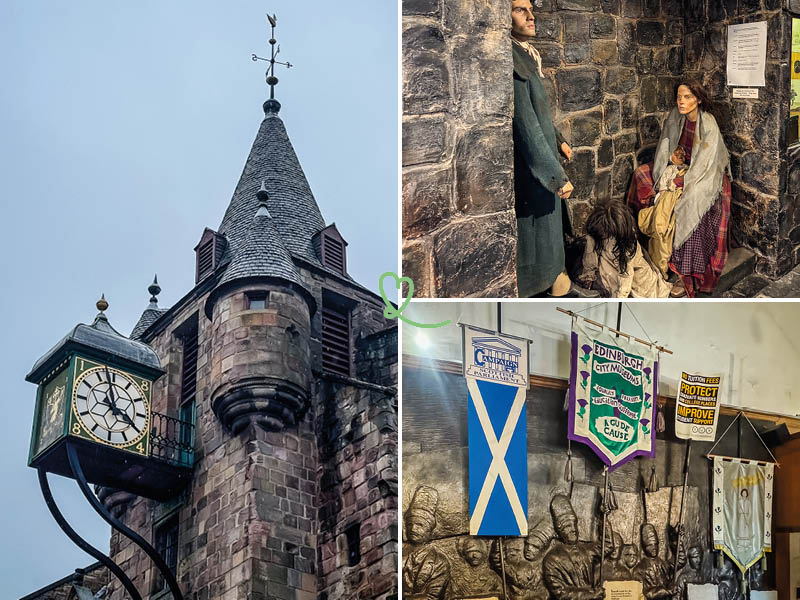
Visiting Edinburgh? Don’t miss the People’s Story Museum! This unique museum traces the history of Edinburgh’s working classes since the 18th century. We were captivated by this authentic approach to Scottish social history, which gives a voice to ordinary workers, servants and craftsmen.

In this article, you’ll find some useful tips to help you prepare for your visit and have a wonderful time!

visit People Story Museum Edinburgh

This opinion is completely independent, based on our experiences. We visited the region anonymously, making our own choices and paying our bills in full.

Why visit the People’s Story Museum?

Is the People’s Story Museum worth it? Our opinion:

Yes, the People’s Story Museum is well worth a visit. It allowed us to discover a lesser-known facet of history, focused not on kings or battles, but on the lives of ordinary people. We follow the daily lives of workers, women and modest families, from the 18th century to the present day.

The scenography is sober but effective. The reconstructions, objects and testimonies give an impression of closeness to those who lived there. The visit takes less than an hour, making it an accessible and enriching stopover that complements the city’s other museums.

A visit to this museum is, in our opinion, one ofthe best things to do in Edinburgh.

People Story Museum - Our opinion

Why is the People Story Museum famous?

The People’s Story Museum occupies the Canongate Tolbooth, an iconic building recognizable by its distinctive clock-topped tower that dominates the lower Royal Mile. The museum stands out for its unique focus on the history of Edinburgh’s ordinary people.

Unlike traditional museums that focus on famous personalities, this place gives a voice to anonymous citizens. Its exceptional collection of oral testimonies and everyday objects makes it a benchmark for understanding the social evolution of Scotland’s capital.

People Story Museum - Celebrity

Our favorite moments

We particularly appreciated it:

  • Reconstructions of 19th-centuryworking-class interiors, immersing us in the atmosphere of the time.
  • The audio testimonials from Royal Mile residents also touched us with their authenticity.
  • Finally, we were fascinated by the richly documented Scottish trade union movements.
People Story Museum - Favorite moments
WHERE TO STAY IN Edinburgh

Our favorites: neighborhoods and hotels

Our selection is coming soon Hotel 1 – See prices, photos and availability

Our selection is coming soon Hotel 1 – See prices, photos and availability

Our selection is coming soon Hotel 1 – See prices, photos and availability

See our complete selection of the best hotels in Edinburgh (coming soon)

See all available accommodation >>

History in brief

Housed in the former Canongate Tolbooth, a 16th-century prison and court building, the museum opened in 1989 to give a voice to Edinburgh’s working classes. It traces the lives of the city’s inhabitants from the 18th to the 20th century through objects, testimonials and reconstructions of everyday scenes. We discover working conditions, domestic life, trade union movements and social struggles. The museum is free of charge and remains a committed place, dedicated to the memory of ordinary people.

People Story Museum - History

How to find us: People’s Story Museum, Edinburgh

Where is the People’s Story Museum?

The museum’s address is 163 Canongate, Edinburgh (EH8 8BN).

  • In downtown Edinburgh, on the Royal Mile
  • In the Canongate Tolbooth, a historic 16th-century building
  • Close to the Palace of Holyroodhouse and the Scottish Parliament
People Story Museum - Location
Royal Mile
RENT YOUR CAR IN Scotland
  • Compare prices on our preferred platform: DiscoverCars – one of the best rated sites.
  • Choose a car that’s not too wide, as some roads have only one lane.
  • Book early for choice.
Driving in Scotland
View cars >>

See our tips (coming soon)

How to get there?

  • Located on the Royal Mile, the museum is easily accessible from central Edinburgh.
  • Bus routes 35 and 6 stop nearby.
  • From Waverley station, it’s a 15-minute walk.
People Story Museum - Access

Parking

  • As parking on the Royal Mile is difficult, we recommend you use the Holyrood Car Park.
  • However, parking spaces are limited, so you’ll find it easier to park at the St James Centre parking lot, a 15-minute walk from the museum.
People Story Museum - Parking
Holyrood Car Park
discover edinburgh
  • What to do in Edinburgh (coming soon)
  • Best hotels (coming soon)
  • Best restaurants (coming soon)
Edinburgh at sunset

Useful tips: duration, schedules, eating…

Best time to visit

  • We recommend visiting the People’s Story Museum in the morning to avoid the crowds.
  • Extended opening hours are available from May to September.
  • During the Edinburgh Festival in August, look out for more visitors and a particularly lively atmosphere in the area.
People Story Museum - Best moment

Length of visit and main difficulties

  • Allow 1 hour for your complete visit to the museum.
  • The building features narrow staircases and passageways.
  • Access is limited to the ground floor and 1st floor for people with reduced mobility.
People Story Museum - Visiting time

Advice on how to visit

  • Start your visit on the first floor, which presents the historical foundations of Edinburgh.
  • Then move on to the floor devoted to contemporary testimonies.
  • The video room was closed at the time of our visit.
People Story Museum - Sense of visit
PLAN YOUR DREAM TRIP AROUND scotland

All the information you need for your trip:

  • 15 maps for easy planning
  • + 170 pre-selected locations
  • Practical advice
  • + 170 photos to help you choose
Coming soon >>
Cover-eBook-Road-Trip-Scotland

Visiting with children

The museum offers family-friendly activities with game booklets to help you discover Edinburgh’s history in an interactive way. There are also period re-enactments to captivate the youngest visitors. Audio testimonials include stories specially selected for young audiences.

  • Family-sized sensory backpacks are available for people with neurodivergences or additional support needs (ASN), and can be requested at reception. Find out more here.
People Story Museum - Visits with children

Schedules and rates

The museum is open:

  • Every day from 10 a.m. to 5 p.m.
  • More details here

Rates:

  • Free admission for all visitors
  • Voluntary donations accepted to support the museum
People Story Museum - Opening hours and prices

Catering

The museum doesn’t have a café, but the Royal Mile offers plenty of nearby dining options. We recommend Clarinda’s Tearoom Restaurant, just 3 minutes away, on the same sidewalk.

People Story Museum - Restoration - Clarida's
Clarinda’s Tearoom

A glimpse of daily life in Edinburgh from the 18th to the 20th century

Servitude, social hierarchy and deprivation of freedom

We learned a great deal about the living conditions of the servants who made up a large part of Edinburgh’s population. We were able to observe reconstructions of maids’ rooms under the roofs, furnished with a simple bed and a basin.

People Story Museum - family stage

The apprenticeship contracts on display show how young men were bound to their masters for several years, in a system akin to servitude. This section illustrates the rigidity of the Scottish social hierarchy, where social mobility remained exceptional.

People Story Museum - Servitude and hierarchy

Precarious workers and forgotten trades

The museum highlights the many small trades that sustained Edinburgh’s working classes. We were fascinated by the diversity of activities: water carriers, rag-pickers, street vendors and town criers.

People Story Museum - artisans

You’ll discover the tools and uniforms of these precarious workers who subsisted from day to day. The testimonies gathered reveal the ingenuity of these men and women who created their own jobs in a flourishing informal economy.

People Story Museum - precarious workers

You’ll also learn about the impact of the first industrial revolutions on these traditional trades, many of which disappeared in the face of mechanization and new modes of transport.

Justice, public disorder and social control

The museum offers a fascinating insight into the Scottish justice system and its impact on the working classes. We examined police records documenting arrests for drunkenness, vagrancy and disorderly conduct.

People Story Museum - Justice and social control

You’ll be able to see a reconstruction of the Tolbooth cell, where offenders were locked up before their trial. The archives on display reveal that punishments mainly affected the poorest, who were often unable to pay the fines.

People Story Museum - mores et comprtements

We also learned about the means of social control exercised by religious and civil authorities, and how the surveillance of morals and behavior shaped the daily lives of Royal Mile residents.

Testimonies and struggles for social rights in the 20th century

Workers’ awareness and union mobilization

Throughout the rooms, we were able to appreciate the emergence of the Scottish labor movement and its main demands. Banners, posters and union leaflets bear witness to the struggle for shorter working hours and higher wages.

People Story Museum - Workers' consciousness

You’ll discover portraits of local trade union figures such as John MacLean, a socialist revolutionary born in Glasgow but active in Edinburgh. The oral testimonies of activists give an insight into the organization of strikes and demonstrations in working-class neighborhoods.

People Story Museum - small trades

The exhibition also details the creation of the first workers’ cooperatives, which offered economic alternatives based on solidarity to workers and their families.

Women and equality

The museum devotes an important space to the women who left their mark on Edinburgh’s social history through their commitment. We were able to see the careers of local suffragettes who campaigned for women’s suffrage, many of whom were imprisoned for their actions. Personal objects and letters from activists reveal their motivations and sacrifices.

People Story Museum - women

The fight for access to education and skilled professions, long denied to women, is also mentioned. The testimonies of women trade unionists show their crucial role in protest movements, particularly in the textile and food sectors, where they constituted an important but underpaid workforce.

People Story Museum - Committed women

Life stories and memories of the working classes

We particularly enjoyed the contemporary accounts, which give substance to Edinburgh’s social history, especially the stories of former residents of the Royal Mile who recall the transformation of their neighborhood over the decades. You’ll hear accounts of living conditions in the tenements, the typical Edinburgh buildings where several families lived together.

People Story Museum - testimonials

The interviews also reveal community traditions: block parties, mutual aid between neighbors and the transmission of craft skills. The exhibition shows how these communities have managed to preserve their identities despite urban change, creating a collective memory that still nourishes the popular soul of Scotland’s capital today.

People Story Museum - Life stories
Subscribe to our Newsletter
  • Get away from it all with Region Lovers’ beautiful destinations!
  • Once a month
  • Advertising-free

RGPD(Required)
This field is hidden when viewing the form

Frequently asked questions


Do I need to book in advance?

No, reservations are not required for individual visits. Admission is free, but a time slot may be recommended for groups.

People Story Museum - book

Is witchcraft on the agenda at the People’s Story Museum?

Not directly. The museum focuses on everyday life and social struggles, but some stories from the past evoke popular superstitions and beliefs, particularly in poor neighborhoods.

People Story Museum - witchcraft
SHE MADE THE TRIP AND WROTE THE ARTICLE Sèverine

Filed Under: Edinburgh

Museum on the Mound (Edinburgh): visit + photos

By Sèverine, Region Lovers | May 21, 2025 | contains affiliate links - if you use them, we get a small commission (read more)

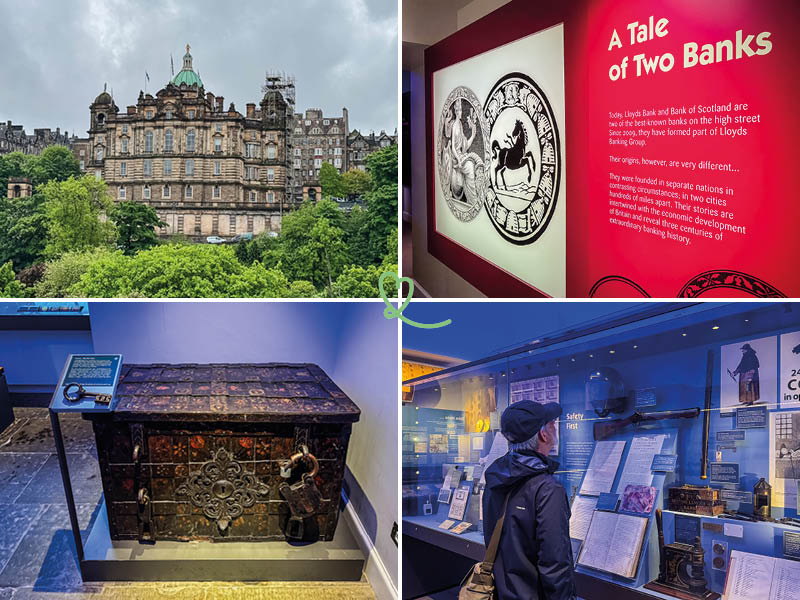
Getting away from it all in Edinburgh? Don’t miss the Museum on the Mound! Housed in the former headquarters of the Bank of Scotland, the museum tracesScotland ‘s financial development through the centuries, and provides an insight into Scotland’s role inglobal economic history.

In this article, you’ll find some useful tips to help you prepare for your visit and have a great time!

visit museum on the mound edimbourg

This opinion is completely independent, based on our experiences. We visited the region anonymously, making our own choices and paying our bills in full.

Why visit Museum on the Mound

Is the museum worth it? Our opinion:

Yes, the Museum on the Mound is well worth a visit. We were won over by the richness of its collections, which offer a fascinating journey through Scottish financial history. This free museum also features interactive presentations accessible to all ages, historic coins and the famous £1 million, which you can admire up close. A unique place that combines education and entertainment.

In our opinion, this is one of the best things to do in Edinburgh.

Museum on the Mound - Our opinion

What’s the Museum on the Mound famous for?

The Museum on the Mound is famous for displaying a million pounds sterling in £20 bills, an impressive sight that always captivates visitors. It is also renowned for its iconic location in one of Edinburgh’s most distinctive buildings, theformer headquarters of the Bank of Scotland.

We particularly enjoyed its collection of antiques and artifacts relating to Scottish banking history. You’ll also discover historic safes that bear witness to the evolution of banking security measures.

Museum on the Mound - Why it's famous

Our favorite moments

During our visit, we noted several points:

  • The million-pound exhibition surprised us: such an impressive sum, physically represented, ultimately takes up very little space.
  • The collection of antique safes and coin-counting machines reflects the ingenuity developed over the centuries.
  • Finally, the architecture of the building itself, with its breathtaking views of the city from certain windows, even in the rain, was another highlight of the visit.
Museum on the Mound - Our favorite moments
WHERE TO STAY IN Edinburgh

Our favorites: neighborhoods and hotels

Our selection is coming soon Hotel 1 – See prices, photos and availability

Our selection is coming soon Hotel 1 – See prices, photos and availability

Our selection is coming soon Hotel 1 – See prices, photos and availability

See our complete selection of the best hotels in Edinburgh (coming soon)

See all available accommodation >>

History in brief

The history of Museum on the Mound is closely linked to that of banking in Scotland. Here are the main stages in its development:

  • 1695: Creation of the Bank of Scotland by an act of the Scottish Parliament
  • 1806: Construction of the main building on The Mound
  • 1870: Major extension of the building with the addition of a neoclassical façade
  • 2006: Museum on the Mound opens in part of the historic building
Museum on the Mound - Brief history

Access: Museum on the Mound, Edinburgh

Where is the Museum on the Mound?

The Museum on the Mound is located in the heart of Edinburgh, and the address is easy to find: The Mound, Edinburgh EH1 1YZ.

  • Edinburgh city center
  • On The Mound, on the edge of Old Town
  • Close to the Royal Mile
  • Above Princes Street Gardens
Museum on the Mound - Location
RENT YOUR CAR IN Scotland
  • Compare prices on our preferred platform: DiscoverCars – one of the best rated sites.
  • Choose a car that’s not too wide, as some roads have only one lane.
  • Book early for choice.
Driving in Scotland
View cars >>

See our tips (coming soon)

How to get there?

The museum is easily accessible from anywhere in Edinburgh.

  • We found that the best option was to get there on foot, especially if you’re staying in Old Town.
  • From Waverley station, it’s a 5-minute walk up the hill.
  • Numerous bus routes serve the area, including those via Princes Street and North Bridge.
Museum on the Mound - How to get there
Weaverley station

Parking

  • Traffic and parking in central Edinburgh can be difficult. Street parking is limited and often expensive.
  • Pay parking lots are also available nearby, such as Blackfriars Street and Castle Terrace, both a 10-minute walk away.
Museum on the Mound - Parking
Blackfriars Street parking lot
discover edinburgh
  • What to do in Edinburgh (coming soon)
  • Best hotels (coming soon)
  • Best restaurants (coming soon)
Edinburgh at sunset

Useful tips: duration, schedules, eating…

Best time to visit

  • Weekday mornings are generally quieter, allowing you to explore the exhibits without being rushed.
  • If you’re visiting Edinburgh during the August festival, plan an early-morning visit to escape the crowds.
  • In short, the first slots after opening or those in the late afternoon (about an hour before closing) will offer you a quieter experience.
Museum on the Mound - Best time to visit

Length of visit and main difficulties

  • Allow 45min to 1h to explore the entire museum at a comfortable pace.
  • The museum is relatively compact but very well organized, making it easy to explore its collections.
  • The building is fully accessible to people with reduced mobility.
  • You can also download a sensory map from the museum’s website, showing the density of lighting, the intensity of sound and the points of interactivity: light, sound and touch. Find out more here.
Museum on the Mound - Visiting time

Advice on how to visit

We liked the chronological organization of the museum. Just follow the signposted route. The progression gives a good understanding of the evolution of Scotland’s financial system. The explanatory panels are clear and instructive. They guide you naturally from one section to the next.

Museum on the Mound - Visiting tips

Guided tours

We didn’t see any mention of guided tours at Museum on the Mound, but laminated guides are available in 5 languages: French, German, Italian, Spanish and… Polish.

Museum on the Mound - Guides
PLAN YOUR DREAM TRIP AROUND scotland

All the information you need for your trip:

  • 15 maps for easy planning
  • + 170 pre-selected locations
  • Practical advice
  • + 170 photos to help you choose
Coming soon >>
Cover-eBook-Road-Trip-Scotland

Visiting with children

The museum is perfectly suited to families.

  • Educational booklets are available free of charge at reception for younger visitors, with games and puzzles to guide them through the museum.
  • Interactive stations are also available to help younger visitors absorb the information.
Museum on the Mound - Visiting with children

Schedules and rates

Museum on the Mound is open:

  • Tuesday to Friday: 10 a.m. to 5 p.m.
  • Saturday: 1 p.m. to 5 p.m.
  • Sunday and Monday: Closed

Price: free of charge. Find out more here.

Museum on the Mound - Opening hours and prices

Diving into the history of coinage in Scotland

The evolution of Scottish currency through the ages

The 8 rooms of Museum on the Mound trace Scotland’s monetary history from its earliest days. We spent a little more time on the ancient coin collection, which bears witness to the evolution of exchange systems over the centuries. You can see coins dating from Roman times to modern coins, including the first specifically Scottish coins minted in the 11th century.

Museum on the mound - antique collection

The chronological presentation enabled us to understand how political and economic upheavals influenced the development of the national currency. Of particular interest was theunion of the Scottish and English crowns. It radically transformed the country’s monetary system.

Museum on the Mound - The evolution of Scottish coinage

Birth and development of the local banking system

During this visit, we learned that Scotland had been at the forefront of financial innovation in Europe, and in particular, how the Bank of Scotland, founded in 1695, was the first commercial bank created by Act of Parliament in the country.

Museum on the Mound - innovation

The presentations also detail the revolutionary introduction of banknotes, an innovation that Scotland adopted long before many other nations. Early calculating machines and original accounting records illustrate the evolution of banking practices. Of particular interest is the story of historic financial crises and how they shaped modern regulations.

Museum on the Mound - The development of the Scottish banking system

Fun and educational experiences around money

Admire a million pounds sterling in banknotes

The highlight of the visit is undoubtedly the million pounds sterling. Its presentation is quite surprising, as it gives a concrete perspective of this considerable sum. Displayed in a secure showcase, the million pounds is made up of neatly stacked bundles of used £20 bills.

We were astonished by the relatively modest volume occupied by this fortune, far less imposing than one might imagine! The installation is complemented by explanations of the security methods used to protect banknotes against counterfeiting.

Museum on the Mound - The million pounds

Creating and financing your own home

Among the fun activities on offer, the “A Home of Your Own” workshop immersed us in the domestic economy of the 1960s. We had fun assembling the different parts of a typical house of the period: a three-bedroom bungalow with garden, garage and modern bathroom.

This interactive model provides a concrete understanding of how a mortgage works and the costs associated with buying a home. Stacking blocks represent the different financial stages, such as the initial deposit, the amount borrowed and the interest to be repaid.

Museum on the Mound - Design your own home

The building’s remarkable architecture

Bank of Scotland’s historic headquarters

The building that houses the Museum on the Mound is an architectural treasure in itself. Built in 1806 and enlarged in 1870, this magnificent neoclassical edifice served as the headquarters of the Bank of Scotland for over two centuries. We were impressed by its imposing facade and its dome overlooking Edinburgh.

Museum on the Mound - Bank of Scotland's historic headquarters

A museum perched on an artificial mountain

The museum’s location on The Mound adds another historical dimension to the visit. We learned that this artificial hill had been created from spoil excavated during the construction of New Town. It was an ambitious engineering project designed to link the medieval Old Town with the new Georgian extension to the north (New Town).

Museum on the Mound - The artificial hill of The Mound
Subscribe to our Newsletter
  • Get away from it all with Region Lovers’ beautiful destinations!
  • Once a month
  • Advertising-free

RGPD(Required)
This field is hidden when viewing the form

Frequently asked questions

Is there a store at Museum on the Mound?

Yes, there’s a store inside the museum. Here we found objects relating to the history of money, children’s books and educational games on the economy and money, as well as souvenirs, including piggy banks in a variety of colors.

Museum on the Mound - Question about the photos
SHE MADE THE TRIP AND WROTE THE ARTICLE Sèverine

Filed Under: Edinburgh, Not classified

Edinburgh Castle (Scotland): visit + photos

By Sèverine, Region Lovers | April 23, 2025 | contains affiliate links - if you use them, we get a small commission (read more)

If you’re planning to spend a few days in Edinburgh, be sure to visit Edinburgh Castle. In addition to magnificent views over the city’s rooftops and its impressive fortified architecture, you’ll learn about important pages in Scottish history and discover its hidden treasures.

In this article, you’ll find all our useful tips in pictures to help you prepare for your visit and have a wonderful time!

visit edimbourg castle

This opinion is completely independent, based on our experiences. We visited the region anonymously, making our own choices and paying our bills in full.

Why visit Edinburgh Castle?

Is the castle worth it? Our opinion:

Yes, Edinburgh Castle is well worth a visit. Located at the top of Castle Rock, it dominates the entire city. Its impressive architecture and numerous areas to explore fully justify spending some time there. Even though it’s a very busy place, we found that the diversity of views, buildings and historical treasures made it an Edinburgh must-see.

In our opinion, this is one of the best things to do in Edinburgh.

We strongly advise you to reserve your ticket to avoid the queues.

Gatehouse, Edinburgh Castle

Why is Edinburgh Castle famous?

A true symbol of Scotland, the castle has served as royal residence, fortress and military garrison. Today, it houses a number of iconic landmarks: the Scottish Crown Jewels, the Stone of Destiny, the famous Mons Meg cannon, the One O’Clock Gun firing range and St. Margaret’s Chapel, Edinburgh’s oldest building.

Our favorite moments

We particularly appreciated it:

  • Panoramic views from the ramparts: throughout the visit, we took time to admire the scenery. From the different levels, the panoramas are superb: views of Edinburgh’s rooftops, Princes Street gardens and the Firth of Forth in the distance.
  • The atmosphere of Hospital Square: a real break in the tour. The equestrian statue of Earl Haig is a reminder of the site’s military history.
  • The elegance of the Great Hall: one of the finest interior spaces in the castle. The wooden framework is remarkable, and the walls decorated with antique weapons create a spectacular ambience. We loved its solemn, well-preserved feel.
WHERE TO STAY IN Edinburgh

Our favorites: neighborhoods and hotels

Our selection is coming soon Hotel 1 – See prices, photos and availability

Our selection is coming soon Hotel 1 – See prices, photos and availability

Our selection is coming soon Hotel 1 – See prices, photos and availability

See our complete selection of the best hotels in Edinburgh (coming soon)

See all available accommodation >>

History in brief

Occupied since ancient times, the site became a royal castle in the 12th century under David I. It played a key role in Scotland’s wars of independence. It played a key role in the Scottish Wars of Independence. The royal family stayed here until the 16th century. It was then used as a garrison and prison. Since the 20th century, it has been one of Europe’s most visited sites.

How to get there: Edinburgh Castle

Where is the castle?

  • The castle stands atop Castle Rock, an ancient volcano in the heart of the old town.
  • It marks the western end of the Royal Mile.
  • Its silhouette is visible from many points in Edinburgh, making it an immediate landmark.
Edinburgh Castle from The Vennel
RENT YOUR CAR IN Scotland
  • Compare prices on our preferred platform: DiscoverCars – one of the best rated sites.
  • Choose a car that’s not too wide, as some roads have only one lane.
  • Book early for choice.
Driving in Scotland
View cars >>

See our tips (coming soon)

How to get there?

  • The main access is on foot via Castlehill.
  • It’s easily reached from the city center by walking up the Royal Mile.
  • Waverley station is a 10-minute walk away.
  • Several bus routes stop nearby (National Museum or George IV Bridge).
view of Waverley Station

Parking

There is no reserved parking for visitors to the castle. The nearest public parking lots are at Castle Terrace and Johnston Terrace. We recommend using public transport or walking from the city center.

discover edinburgh
  • What to do in Edinburgh (coming soon)
  • Best hotels (coming soon)
  • Best restaurants (coming soon)
Edinburgh at sunset

Useful tips: duration, schedules, eating…

Best time to visit

The castle is very busy, especially between 11am and 2pm. We advise you to come as soon as it opens or at the end of the day. The cannon shot at 1 p.m. attracts a lot of people, but it’s well worth the detour if you like tradition.

Crown Square

Length of visit and main difficulties

  • Allow 2 to 3 hours to explore the entire site.
  • Some of the climbs are steep, and several areas feature irregular steps and cobblestones.
  • An accessibility card is available for visitors with reduced mobility. Find out more here.

Advice on how to visit

The route is well signposted. We found it very pleasant to follow the natural ascent to Crown Square. Starting with the ramparts and cannons, the tour builds up to the royal apartments and jewels.

Crown Square entrance porch
PLAN YOUR DREAM TRIP AROUND scotland

All the information you need for your trip:

  • 15 maps for easy planning
  • + 170 pre-selected locations
  • Practical advice
  • + 170 photos to help you choose
Coming soon >>
Cover-eBook-Road-Trip-Scotland

Visiting with children

While children are particularly fond of the cannons, the armoury and the stories about kings and battles, we didn’t notice any special activities dedicated to them. However, an activity book is available from the castle store. Find out more here.

Toilets with changing tables are available.

Schedules and rates

The château is open every day:

  • April to September: 9.30am – 6pm
  • October to March: 9.30am – 5pm
    Last admission 1h before closing time. Closed on December 25 and 26.

Adult price: £19.50

Guided tours

  • Guided tours are offered in English at set times.
  • Multilingual audio guides are available for hire at the entrance to the site, or as a mobile version via the château app.
  • Find out more here.

Catering

The château has two dining areas:

  • The Redcoat Cafe, located on the esplanade, offers hot and cold dishes with a view of the city.
  • The cozier Tea Rooms serves teas, pastries and light lunches in a tranquil setting.
Redcoat Cafe terrace


Access and early fortifications from Castle Hill

Climb Castle Hill to the main entrance

On our visit, we walked up Johnston Terrace to Castle Hill via the Castle Wynd North staircase. As we climbed, the view of the city gradually opened up.

Johnston Terrace, Edinburgh
Johnston Terrace

Crossing the Gatehouse and Portcullis Gate

Entrance is via the Gatehouse, an imposing defensive structure marking the main entrance. Then climb to the right to Portcullis Gate, an ancient drawbridge with a portcullis and thick walls. It was clear that we were entering a fortress.

Portcullis Gate, Edinburgh Castle
Portcullis Gate

Admire the cannons of Mill’s Mount Battery

Just beyond the gate, you come to a vast esplanade where we found the lined-up cannons of Mill’s Mount. But it was the view over the city that caught our eye. It’s already spectacular.

view from Mill's Mount

Explore the lower level: esplanade, museum and ramparts

Panoramic break on the esplanade

After Mill’s Mount, we stayed a while to admire the view from the open esplanade over the city’s rooftops. The Redcoat Cafe is also a great place to grab a bite to eat or a drink before continuing up the hill.

view from Mill's Mount

Earl Haig’s equestrian statue in Hospital Square

Continuing on, on our right, we discovered a square square marked by the equestrian statue of Earl Haig, a Scottish military figure of the First World War. Hospital Square provides another real sense of space in the heart of the ramparts.

Hospital Square
Hospital Square

Climb up to Foog’s Gate and the upper ramparts

The path then climbs gently to Foog’s Gate. This fortified passage marks the entrance to the upper level of the site. On the way up, we again enjoyed lovely views of the walls and surrounding landscape. The atmosphere becomes more historic and solemn.

Discover the upper level: cannons, chapel and historic buildings

The legendary Mons Meg and its fortifications

After passing through Foog’s Gate, we soon came across Mons Meg, one of Europe’s most famous medieval cannons. Its massive size always impresses visitors. Around it, the ramparts offer spectacular views over the town and the Forth estuary.

Mons Meg

St Margaret’s Chapel, the oldest building on the site

A little further on, we discovered the small 12th-century Sainte-Marguerite chapel. It’s the oldest building on the site. Its simple architecture and thick walls create an intimate atmosphere, in contrast to the other, more imposing buildings. And above it, an ever more breathtaking view.

view from St Margaret's Chapel

The Scottish National War Museum

Nearby, you’ll find the Scottish National War Museum. It traces Scotland’s military history through a fine collection of objects: uniforms, weapons, paintings and battle stories. The visit is quick but interesting, even for non-specialists.

Treasures of the former royal palace: Honours, Royal Apartments and Great Hall

We finally emerged into Crown Square and entered the most prestigious spaces.

  • The Honours of Scotland and the Stone of Destiny
    We began by discovering the jewels of the Scottish crown: crown, sceptre and ceremonial sword. The famous Stone of Destiny, used at royal coronations, is on display in the same room. The staging is sober and highlights these national symbols.
honours of Scotland
  • The royal apartments
    The tour continues through the former apartments of the royal family. The rooms are simply furnished, but allow visitors to imagine life at the château. Panels explain the role of the different rooms and their use at the time.
Royal Palace
  • The Great Hall
    We finished with the Great Hall, a vast reception hall built in the early 16th century. Its wooden framework is impressive. The walls are decorated with ancient weapons, shields and coats of mail, recalling the military function of the place.
Great Hall
Subscribe to our Newsletter
  • Get away from it all with Region Lovers’ beautiful destinations!
  • Once a month
  • Advertising-free

RGPD(Required)
This field is hidden when viewing the form

Frequently asked questions

Are there any special events in the castle?

Yes, concerts, temporary exhibitions and ceremonies can be held on the castle grounds. Check the official website for dates here.

SHE MADE THE TRIP Claire
SHE WROTE THE ARTICLE Sèverine

Filed Under: Edinburgh

St Giles’ Cathedral (Edinburgh): visit + photos

By Sèverine, Region Lovers | April 23, 2025 | contains affiliate links - if you use them, we get a small commission (read more)

If you’re planning a visit to Edinburgh, you’ll pass through the Royal Mile and, from there, you won’t be able to miss the massive silhouette of St. Giles Cathedral. Don’t hesitate to push open its heavy door and admire the treasures it houses – you won’t regret it.

In this article, you’ll find some useful tips to help you prepare for your visit and have a wonderful time!

visit saint gilles cathedral edinburgh

This opinion is completely independent, based on our experiences. We visited the region anonymously, making our own choices and paying our bills in full.

Why visit St Giles’ Cathedral?

Is the cathedral worth it? Our opinion:

Yes, St Giles’ Cathedral is well worth a visit. It’s particularly striking. The exterior of the monument is already very impressive, with its massive, dark silhouette and crown spire. But it’s the interior that captivated us most. The variety of points of interest and the many surprises on offer along the way really won us over.

In our opinion, this is one of the best things to do in Edinburgh.

St Giles' Cathedral, Edinburgh

Why is St Giles’ Cathedral famous?

Also known as the High Kirk of Edinburgh, the cathedral is famous for its crown spire, a particularly rare masterpiece of Gothic architecture. Visible from afar, it’s surprisingly slender and original. Inside, we were impressed by the colorful stained glass windows, the ceilings and themonumental organ. It’s even possible to get inside the instrument. The Chapelle du Chardon, with its impressive sculpted walls, is a real gem.

stained glass windows, St Giles' Cathedral, Edinburgh

Our favorite moments

We particularly appreciated it:

  • The contrast between the dark, massive exterior and the richly decorated interior.
  • The Chapelle du Chardon(Thistle Chapel) charmed us with its calm atmosphere, soft light and fine detail.
  • Finally, access to the interior of the organ was a rare and original experience, almost intimate, at the heart of this monumental instrument.
ceiling, Thistle Chapel, St Giles' Cathedral, Edinburgh
Chapelle du Chardon ceiling
WHERE TO STAY IN Edinburgh

Our favorites: neighborhoods and hotels

Our selection is coming soon Hotel 1 – See prices, photos and availability

Our selection is coming soon Hotel 1 – See prices, photos and availability

Our selection is coming soon Hotel 1 – See prices, photos and availability

See our complete selection of the best hotels in Edinburgh (coming soon)

See all available accommodation >>

History in brief

Founded in the 12th century, St Giles Cathedral is one of Edinburgh’s oldest monuments. Partially destroyed during English attacks in the 14th century, it was rebuilt in the 15th century in Gothic style, with its famous crown spire added in 1495. In the 16th century, it became a focal point of the Scottish Reformation, led by John Knox. A symbol of Presbyterianism, it has survived the centuries, preserving traces of its eventful history and multiple transformations.

spire, St Giles' Cathedral, Edinburgh

How to find us: St Giles’ Cathedral, Edinburgh

Where is Saint-Gilles Cathedral?

  • St. Giles Cathedral is located in the heart of Edinburgh’s Old Town.
  • It is located on the Royal Mile, the main thoroughfare between the castle and Holyrood Palace.
  • It’s surrounded by many iconic monuments and attractions, including The Real Mary King’s Close, just across the road.
Royal MIle, St Giles' Cathedral, Edinburgh
Royal Mile
RENT YOUR CAR IN Scotland
  • Compare prices on our preferred platform: DiscoverCars – one of the best rated sites.
  • Choose a car that’s not too wide, as some roads have only one lane.
  • Book early for choice.
Driving in Scotland
View cars >>

See our tips (coming soon)

How to get there?

  • On foot: the cathedral is easily accessible from anywhere in Edinburgh city center.
  • By train: Waverley station is less than 10 minutes’ walk away.
  • By bus: the nearest stop is South Bridge.
South Bridge bus stop, St Giles' Cathedral, Edinburgh
South Bridge bus stop

Parking

Parking is particularly tight in Edinburgh’s historic district. There is no dedicated parking for The Real Mary King’s Close, but you can opt for the Blackfriars St parking lot, about 5min walk away.

Parking Blackfriars Street, Edinburgh
Parking Blackfriars Street
discover edinburgh
  • What to do in Edinburgh (coming soon)
  • Best hotels (coming soon)
  • Best restaurants (coming soon)
Edinburgh at sunset

Useful tips: duration, schedules, eating…

Best time to visit

We visited the cathedral in the late morning. The sun was barely filtering through, bringing out the best in the stained-glass windows. The early hours of the day and the late afternoon also offer a quieter atmosphere.

ambiance, St Giles' Cathedral, Edinburgh

Length of visit and main difficulties

  • Allow between 30min and 1h, depending on your interest, to explore the cathedral at your leisure.
  • The tour is easily accessible, with no major difficulties, but some areas may be narrow or occupied by groups.
  • If you want to take photos inside, you’ll need a permit. It cost £2 at the time of our visit.
ramp access, St Giles' Cathedral, Edinburgh

Advice on how to visit

We recommend that you take the time to observe the façade, the crowned spire and the details of the portal before entering. Inside, the first thing you’ll notice is the stained glass windows and flags hanging everywhere as you stroll through the nave. We then moved on to the Chapelle du Charbon, before finishing with a visit to the organ.

ceiling, nave, St Giles' Cathedral, Edinburgh
PLAN YOUR DREAM TRIP AROUND scotland

All the information you need for your trip:

  • 15 maps for easy planning
  • + 170 pre-selected locations
  • Practical advice
  • + 170 photos to help you choose
Coming soon >>
Cover-eBook-Road-Trip-Scotland

Schedules and rates

The cathedral is open Monday to Friday from 10am to 6pm, Saturday from 9am to 5pm and Sunday from 1pm to 5pm.

Admission is free, but a donation is recommended. Find out more here.

nave, St Giles' Cathedral, Edinburgh

Guided tours

  • Audioguides are available in English and German, accessible from your phone via a QR code. The cost is £5.50. You can prepay here.
  • Free daily guided tours are organized at 10:30 am and 2:30 pm. They last 45 minutes. Reservations are essential, as there are many requests. Find out more here.
flags, St Giles' Cathedral, Edinburgh

Discover the exterior of St Giles’ Cathedral

A massive and impressive silhouette in the heart of the Royal Mile

We couldn’t miss the imposing silhouette of St Giles Cathedral on the Royal Mile. This great block of grey stone, often referred to as the Grey Bulk, has dominated Edinburgh’s main street for centuries. The whole thing exudes a real power, more massive than slender, strongly marking the urban landscape. The sculptures on the outside of the building are rather discreet, but invite you to get up close and discover the details.

façade, St Giles' Cathedral, Edinburgh

The crown spire, a Gothic emblem

The most striking feature of the exterior is the crowned spire, completed in 1495. This openwork Gothic structure, unique in Scotland, symbolizes the country’s royal and religious history. We particularly admired it as we stood back in the square, where it stands out perfectly against the Scottish sky.

crown spire, St Giles' Cathedral, Edinburgh

The gateway and heart of Midlothian

Before entering, we took the time to observe the west portal of St Giles Cathedral. The doors and frames feature fine carvings that caught our attention. We didn’t photograph it, but on the floor you can see a heart-shaped paving pattern, the Heart of Midlothian. This pattern marks the former site of the Tolbooth, Edinburgh’s former parliament, court and prison. Tradition has it that passers-by spit on it to ward off bad luck… a local curiosity!

portal, St Giles' Cathedral, Edinburgh

Explore the interior of the cathedral

Colored stained glass

The interior of St Giles Cathedral surprised us with its play of colored light, projected by the many stained glass windows. They depict biblical scenes, but also pay tribute to key figures in Scottish history. We appreciated the diversity of styles, reflecting the different periods of creation and restoration.

stained glass windows, St Giles' Cathedral, Edinburgh

The nave ceilings

The interior of St Giles Cathedral didn’t really impress us with its height, but we did like the elegance of its stone vaults and the overall balance of the nave. The central pillars, remnants of the Norman church destroyed in the 14th century, add a special relief to the space. When we looked up, we also discovered the beautiful painted ceilings, whose blue hues add an unexpected touch.

painted ceiling, St Giles' Cathedral, Edinburgh

Another eye-catching feature is the many flags hanging over the aisles. They are a reminder of St Giles Cathedral’s close links with military history and the various Scottish units. Their colorful presence gives the place a solemn, memorial dimension that contrasts with the surrounding gray stone.

flags, St Giles' Cathedral, Edinburgh

The Chapelle du Chardon, a hidden gem

In the heart of St Giles Cathedral, theThistle Chapel offered a more intimate and refined experience. Built in 1911 for the Order of the Thistle (Scotland’s highest honor), it is magnificently decorated with carved stone and wood.

thistle chapel ceiling, st Giles Cathedral, Edinburgh

The stalls and coat of arms impressed us greatly. This is undoubtedly the most precious and elaborate space in the whole cathedral.

stalls, st Giles Cathedral, Edinburgh

The monumental organ, an immersive experience

The modern organ intrigued us with its imposing dimensions and clean lines. We were given access to the interior of this monumental instrument. A stunning immersive experience that rounded off our visit magnificently.

organ, st Giles Cathedral, Edinburgh
Subscribe to our Newsletter
  • Get away from it all with Region Lovers’ beautiful destinations!
  • Once a month
  • Advertising-free

RGPD(Required)
This field is hidden when viewing the form

Frequently asked questions

Is it possible to visit the interior of the organ all year round?

Built in 1992, it has been designed so that you can walk around the back and discover the inside of the instrument. Simply walk up to the red wooden panel and press the top button to illuminate the interior.

organ, interior, st Giles Cathedral, Edinburgh

Can you climb the crown spire of St Giles Cathedral?

The crown spire of St Giles Cathedral is not open to the public. This spectacular piece of Gothic architecture is purely decorative and closed to the public for safety and structural reasons. There are no stairs or viewing platforms inside the spire itself. The best way to admire this crown of stone is to stand back on the Royal Mile, or to enjoy an overall view from the heights of Edinburgh, as from the castle or Calton Hill.

crowned arrow, st Giles Cathedral, Edinburgh
SHE MADE THE TRIP Claire
SHE WROTE THE ARTICLE Sèverine

Filed Under: Edinburgh

The Real Mary King’s Close (Edinburgh): visit + photos

By Sèverine, Region Lovers | April 23, 2025 | contains affiliate links - if you use them, we get a small commission (read more)

Planning a trip to Edinburgh? If you’d like to learn about the city’s history in a fun way, book your visit to The Real Mary King’s Close! This immersive attraction will take you back in time through the underground streets of the Royal Mile, just as they were in the 17th century.

In this article, you’ll find some useful tips to help you prepare for your visit and have a wonderful time!

visit real mary king close edinburgh

This opinion is completely independent, based on our experiences. We visited the region anonymously, making our own choices and paying our bills in full.

Why visit The Real Mary King’s Close?

Is The Real Mary King’s Close worth it? Our opinion:

Yes, The Real Mary King’s Close is well worth a visit if you like immersive attractions. The tour immersed us in the fascinating history of the old town. It allowed us to explore its authentic remains, narrow streets and preserved dwellings. A costumed guide recounted Scottish history, myths and culture through stories based on real events.

We think it’s one of the best things to do in Edinburgh!

The Real Mary King's Close Edinburgh - Is The Real Mary King's Close worth it? Our opinion:

Why is The Real Mary King’s Close famous?

The Real Mary King’s Close is a preserved underground labyrinth beneath the Royal Mile, revealing authentic 17th-century life in Edinburgh. It’s famous for its harrowing tales of plague, daily life and the haunting legends that populate these forgotten alleys. It is named after Mary King, a merchant and member of the Edinburgh City Council, who gave her name to the lane – a remarkable feat for its time.

The Real Mary King's Close Edinburgh - Why is The Real Mary King's Close famous?

Our favorite moments

During our visit, there were several moments that particularly struck us:

  • The Mary King’s Close itself, which we glimpse throughout the tour but only really get to grips with at the end – a highlight that rounds off the visit perfectly.
  • Discover the habits and customs of 17th-century Edinburgh, brought to life by our costumed guides.
  • Captivating accounts of the great plague epidemics and the invention of “Barbourg”, a local solution to the disease.
The Real Mary King's Close Edinburgh - Our favourite moments
WHERE TO STAY IN Edinburgh

Our favorites: neighborhoods and hotels

Our selection is coming soon Hotel 1 – See prices, photos and availability

Our selection is coming soon Hotel 1 – See prices, photos and availability

Our selection is coming soon Hotel 1 – See prices, photos and availability

See our complete selection of the best hotels in Edinburgh (coming soon)

See all available accommodation >>

History in brief

Here are the milestones in the fascinating history of this unique site:

  • Mary King’s Close was originally a network of merchant lanes dating from the 17th century, located beneath the present-day Royal Mile.
  • The street takes its name from Mary King, an independent woman who lived here in 1635 and ran a textile business.
  • In 1645, a terrible plague epidemic ravaged the area, marking its history forever.
  • In 1753, part of the street was demolished and buried when the City Chambers were built, making it inaccessible for centuries.
  • It wasn’t until 2003 that the site was reopened as a tourist attraction, allowing the public to discover these alleys frozen in time.
The Real Mary King's Close Edinburgh - History in brief

Directions: The Real Mary King’s Close, Edinburgh

Where is The Real Mary King’s Close?

  • Edinburgh city center, Old Town
  • On the Royal Mile, opposite St Giles Cathedral
  • 10min walk from Waverley Station
The Real Mary King's Close Edinburgh - Where is The Real Mary King's Close?
St Giles Cathedral
RENT YOUR CAR IN Scotland
  • Compare prices on our preferred platform: DiscoverCars – one of the best rated sites.
  • Choose a car that’s not too wide, as some roads have only one lane.
  • Book early for choice.
Driving in Scotland
View cars >>

See our tips (coming soon)

How to get there?

Access to The Real Mary King’s Close is particularly easy from the Royal Mile, the main thoroughfare in Edinburgh’s historic center. We recommend several options for getting there:

  • On foot: This is the most pleasant option. Allow 10min from Waverley station. Look up and spot St Giles Cathedral, The Real Mary King’s Close is just across the road.
  • By bus: The nearest bus stop is South Bridge.
  • By bike: Cycle paths lead to the historic center, and bike racks are available nearby.

If you come by car, be aware that traffic can be difficult in the historic center. We preferred to leave our car behind and enjoy the city on foot.

The Real Mary King's Close Edinburgh - How to get there?
South Bridge stop

Parking

Parking is particularly tight in Edinburgh’s historic district. There is no dedicated parking for The Real Mary King’s Close, but you can opt for the Blackfriars St parking lot, about 5min walk away.

The Real Mary King's Close Edinburgh - Parking
Parking Blackfriars Street
discover edinburgh
  • What to do in Edinburgh (coming soon)
  • Best hotels (coming soon)
  • Best restaurants (coming soon)
Edinburgh at sunset

Useful tips: duration, schedules, eating…

Best time to visit

To make the most of your experience at The Real Mary King’s Close, timing is everything.

  • The morning tours, a little less crowded, offer a more intimate and personalized experience.
  • Because this attraction is located underground, it is perfectly accessible all year round, whatever the weather conditions outside – a great asset in Edinburgh!
  • Book your ticket in advanceespecially in high season (summer and vacation periods).
The Real Mary King's Close Edinburgh - Best time to visit

Length of visit and main difficulties

  • Allow 1 hour for the guided tour of The Real Mary King’s Close.
  • We recommend that you arrive 10 to 15 minutes before the scheduled time to check in and get ready.
  • The tour itself lasts about 50 minutes.
  • Notable difficulties include narrow passages, uneven floors and several staircases (around 60 steps down and 40 up).
  • Finally, if you suffer from claustrophobia, the visit can be quite trying, as some areas are quite confined.
The Real Mary King's Close Edinburgh - Visit duration and main difficulties

Advice on how to visit

The tour of The Real Mary King’s Close takes place exclusively with a guide. You’ll follow a well-defined route through the underground alleyways, which means there’s really no choice about the itinerary.

PLAN YOUR DREAM TRIP AROUND scotland

All the information you need for your trip:

  • 15 maps for easy planning
  • + 170 pre-selected locations
  • Practical advice
  • + 170 photos to help you choose
Coming soon >>
Cover-eBook-Road-Trip-Scotland

Visiting with children

  • The Real Mary King’s Close is a captivating experience for young and old alike.
  • Costumed guides embody historical figures and tell the stories of former residents in an interactive and educational way, bringing history to life for young visitors.
  • Some of the stories and the general atmosphere may frighten the most sensitive, but nothing is truly terrifying.
  • A visit to the boutique should also delight them…
  • Please note, however, that the tour is reserved for children over 5 years of age.
The Real Mary King's Close Edinburgh - Visiting with children
In the store

Schedules and rates

The site is generally open:

  • Monday to Friday: 10 a.m. to 5 p.m.
  • Saturday and Sunday: 9.30 a.m. to 6 p.m.

Timetables vary according to the season, so check the official website before your visit. Find out more here.

Price: £24
Booking in advance is essential, as the attraction is often fully booked, especially during the high season.

The Real Mary King's Close Edinburgh - Opening hours and prices

Guided tours

  • The tour is guided.
  • For international visitors, free audio guides are available in several languages, including French and Spanish, to complement the guide’s explanations.
  • Photography is strictly forbidden inside, due to the darkness of the premises and to preserve the immersive experience for all visitors.
The Real Mary King's Close Edinburgh - Guided tours

Before your visit: a museum to tide you over

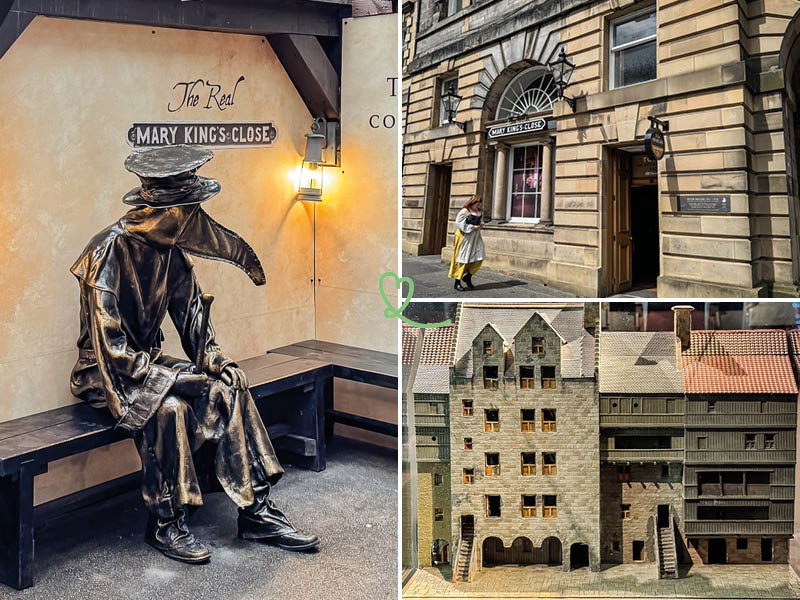
Before entering the underground passages, we discovered a small but particularly instructive museum area. This preamble allowed us to immerse ourselves in the fascinating history of 17th-century Edinburgh. The detailed models gave us a clear idea of the organization of the closes and the architecture of the buildings that no longer exist.

The Real Mary King's Close Edimbourg - Before the visit: a museum for waiting

You’ll particularly appreciate the everyday objects on display, which bear witness to the life of the inhabitants of the time, as well as the explanatory panels, which are full of striking anecdotes about life in the closes. These narrow, dark alleyways, characteristic of old Edinburgh, were often unhealthy and overcrowded. This background proved invaluable in helping us better understand the experience that awaited us underground.

everyday objects, The Real Mary King's Close

The immersive underground guided tour

Photos were forbidden during the visit (we couldn’t illustrate our tour with pictures), so we let ourselves be carried away by the atmosphere of the premises, where the lighting effects are subtly orchestrated to highlight the preserved architecture.

Our guide’s fascinating tales brought to life before our eyes the inhabitants of bygone days: busy merchants, doctors battling the plague, or ordinary citizens facing daily hardships. The atmosphere is certainly dark, perfectly in keeping with historical reality, but never truly frightening.

The Real Mary King's Close Edinburgh - The immersive underground tour
Subscribe to our Newsletter
  • Get away from it all with Region Lovers’ beautiful destinations!
  • Once a month
  • Advertising-free

RGPD(Required)
This field is hidden when viewing the form

Frequently asked questions

Is Real Mary King’s Close scary?

While The Real Mary King’s Close is known for being a place haunted by sometimes disturbing tales, the experience here is more historical than scary. We found the atmosphere dark and mysterious, but never truly terrifying. Unlike some tourist attractions, there are no actors popping up to scare you, and no special effects designed to frighten visitors.

The Real Mary King's Close Edinburgh - Is the Real Mary King's Close scary?

Can we visit without a guide?

It’s absolutely impossible to visit The Real Mary King’s Close without a guide. The environment is dark, sometimes damp, with narrow passages that require vigilance to ensure visitor safety. What’s more, the guides’ expertise is essential to understanding the site’s rich history.

SHE MADE THE TRIP AND WROTE THE ARTICLE Sèverine

Filed Under: Edinburgh, Not classified

  • « Go to Previous Page
  • Page 1
  • Page 2
  • Page 3
  • Page 4
  • Interim pages omitted …
  • Page 6
  • Go to Next Page »

Primary Sidebar

Footer

Design

With an emphasis on typography, white space, and mobile-optimized design, your website will look absolutely breathtaking.

Learn more about design.

Content

Our team will teach you the art of writing audience-focused content that will help you achieve the success you truly deserve.

Learn more about content.

Strategy

We help creative entrepreneurs build their digital business by focusing on three key elements of a successful online platform.

Learn more about strategy.

Copyright Scotland Lovers © 2026

Gérer le consentement

We share everything with you: our favourite places, our tips, our good plans... and without invading you with ads! To bring you the best possible site, cookies are an essential ingredient. Do you accept them? Find out more

Fonctionnel Always active
Le stockage ou l’accès technique est strictement nécessaire dans la finalité d’intérêt légitime de permettre l’utilisation d’un service spécifique explicitement demandé par l’abonné ou l’utilisateur, ou dans le seul but d’effectuer la transmission d’une communication sur un réseau de communications électroniques.
Préférences
Le stockage ou l’accès technique est nécessaire dans la finalité d’intérêt légitime de stocker des préférences qui ne sont pas demandées par l’abonné ou l’utilisateur.
Statistiques
Le stockage ou l’accès technique qui est utilisé exclusivement à des fins statistiques. Le stockage ou l’accès technique qui est utilisé exclusivement dans des finalités statistiques anonymes. En l’absence d’une assignation à comparaître, d’une conformité volontaire de la part de votre fournisseur d’accès à internet ou d’enregistrements supplémentaires provenant d’une tierce partie, les informations stockées ou extraites à cette seule fin ne peuvent généralement pas être utilisées pour vous identifier.
Marketing
Le stockage ou l’accès technique est nécessaire pour créer des profils d’utilisateurs afin d’envoyer des publicités, ou pour suivre l’utilisateur sur un site web ou sur plusieurs sites web ayant des finalités marketing similaires.
  • Manage options
  • Manage services
  • Manage {vendor_count} vendors
  • Read more about these purposes
Voir les préférences
  • {title}
  • {title}
  • {title}
Gérer le consentement
Pour offrir les meilleures expériences, nous utilisons des technologies telles que les cookies pour stocker et/ou accéder aux informations des appareils. Le fait de consentir à ces technologies nous permettra de traiter des données telles que le comportement de navigation ou les ID uniques sur ce site. Le fait de ne pas consentir ou de retirer son consentement peut avoir un effet négatif sur certaines caractéristiques et fonctions.
Fonctionnel Always active
Le stockage ou l’accès technique est strictement nécessaire dans la finalité d’intérêt légitime de permettre l’utilisation d’un service spécifique explicitement demandé par l’abonné ou l’utilisateur, ou dans le seul but d’effectuer la transmission d’une communication sur un réseau de communications électroniques.
Préférences
Le stockage ou l’accès technique est nécessaire dans la finalité d’intérêt légitime de stocker des préférences qui ne sont pas demandées par l’abonné ou l’utilisateur.
Statistiques
Le stockage ou l’accès technique qui est utilisé exclusivement à des fins statistiques. Le stockage ou l’accès technique qui est utilisé exclusivement dans des finalités statistiques anonymes. En l’absence d’une assignation à comparaître, d’une conformité volontaire de la part de votre fournisseur d’accès à internet ou d’enregistrements supplémentaires provenant d’une tierce partie, les informations stockées ou extraites à cette seule fin ne peuvent généralement pas être utilisées pour vous identifier.
Marketing
Le stockage ou l’accès technique est nécessaire pour créer des profils d’utilisateurs afin d’envoyer des publicités, ou pour suivre l’utilisateur sur un site web ou sur plusieurs sites web ayant des finalités marketing similaires.
  • Manage options
  • Manage services
  • Manage {vendor_count} vendors
  • Read more about these purposes
Voir les préférences
  • {title}
  • {title}
  • {title}